

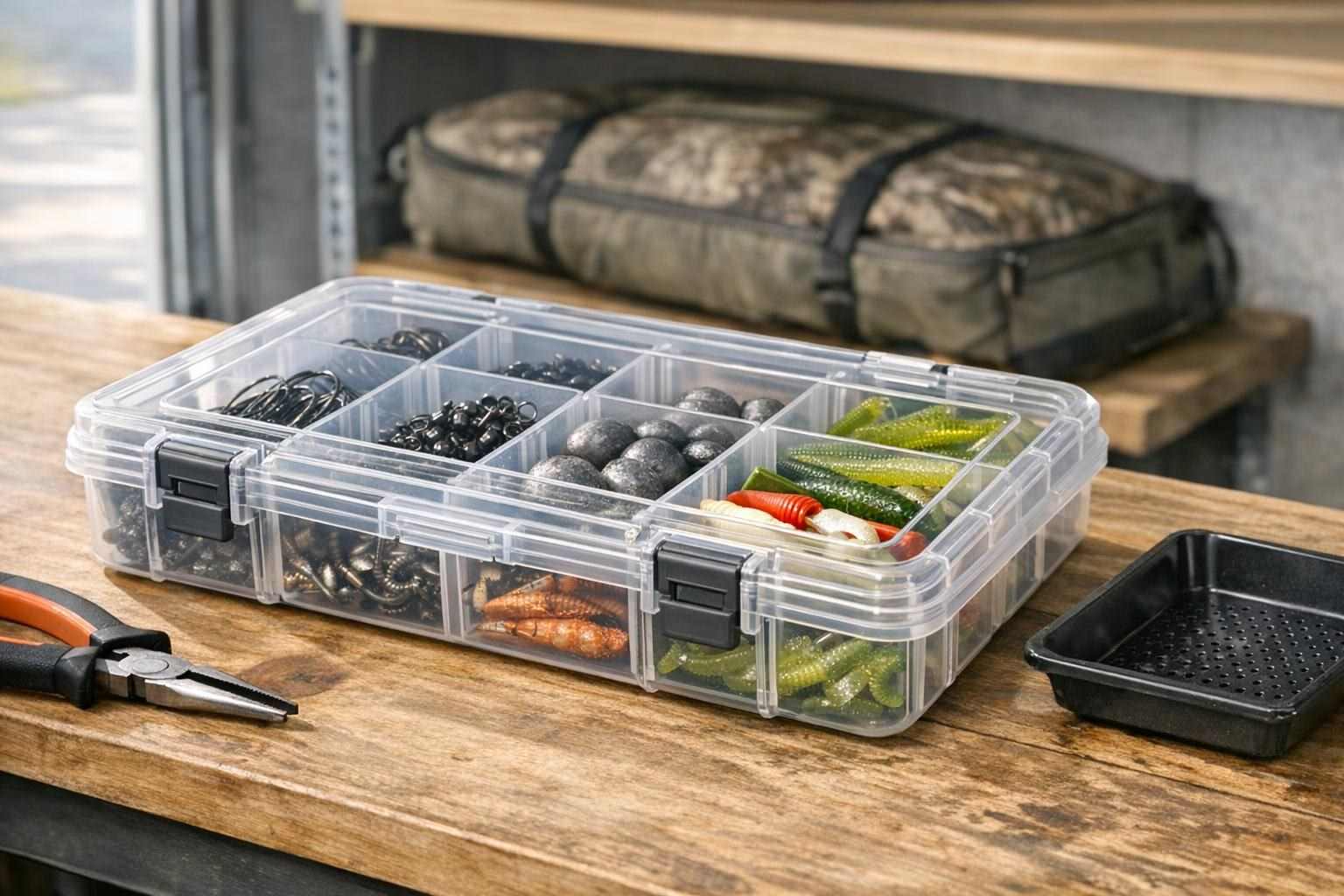
Shared garages can be very difficult to organize for fishermen and hunters. We have seen wet fishing tackle being stored with sensitive hunting cases, hooks being lost in random storage boxes, and the most used items being stored in a manner that blocks off safety equipment. In order to set up a well functioning storage area for your gear, you don't necessarily have to setup a completely new garage. With some thinking ahead and sorting of your gear into different categories (frequent use, damaged, etc…), you can come up with a very effective storage system. This system can then be split up into sub categories for different activities (fishing, hunting, cleaning, etc…).
Start with a Clean Slate
In organizing fishing tackle and hunting equipment for storage in your garage, it's smart to first remove all of the gear from the space and sort it all out on the floor. Begin by sorting the items by type. Then sort within those types by the condition of the items. So for example, you might have wet gear, sharp tools, breakable items, clothing, and paperwork to sort through. As you go through the items of each type, be sure to look for items that need to be repaired or even replaced. Damp or salt/mud stained items are a good place to start as they can easily cause further problems if not dried and put away properly.
It's also important to look for signs of wear on individual pieces of tackle. Examples of damage include dampness, salt/mud residue, cracks to plastic, signs of rust, damaged straps etc. Even items such as batteries in lanterns etc can be overlooked, but left for extended periods can also go flat. Where necessary repair/replacement of gear should be undertaken prior to storage to ensure that items are not left to deteriorate over time. Especially sensitive items such as those used for hunting that would suffer dirt and moisture damage were they to be left on the garage floor, on concrete etc.
Zoning Your Garage
Divide your garage into specific zones to be used for particular sporting activities, for sorting, for preparation, for muddy clothing, etc. Fishing gear will probably need to be stored near a workbench. Boot, waders and clothing that has been in the field can be stored near the front of the garage and cleaned there. Optics, guns, shotgun, clubs, archery equipment, scuba gear etc. should be stored in a dry part of the garage away from water and concrete floors as these can harbor moisture.
Sharp edge tools, which include fishing tackle like hooks and also hunting tools like knives, need to be stored in a safe manner to prevent cut accidents and need to be stored out of children's reach. Instruments with sharp edges should be stored in closed storage and ideally in areas that are not frequently used and are away from normal walk-through traffic to prevent accidental activation. In terms of weapons, these need to be stored in line with local legislation and it is always worth remembering that the methods of storage are continually updated.
Remember, the way you organize your gear depends on the risks you're trying to avoid in the first place. Don't place sensitive equipment in a part of your garage where it'll collect moisture, including walls that run along the outside of your home and tend to be cooler than the rest of the space.
Select the Right Storage Solutions
Make sure your storage containers fit your specific types of gear. Clear, latching storage bins are great for storing your fishing tackle because you can see what you have stored away in the bin and you can prevent spills. You can add dividers to your containers but make sure the number of compartments you create will actually fit what you are trying to store away. Too many small sections can make sorting hard and large sections can be better suited for storing items that you frequently use, for example soft plastics and the like. Your sharpest hooks and such should be stored in the tool boxes that have compartments.
It is also important to remember not to store damp or wet equipment in bins and containers, even if they are closed. This type of gear should be allowed to fully dry out before being put away. Wet clothing and fishing boots should be stored in a drying area of the garage and then transferred to breathable storage bags and containers to stop dust settling on them and to allow any remaining moisture to escape.
Another aspect to consider when storing sensitive gear is to ensure hard cases are not stored in high stacks as they could fall and be damaged. Ideal storage for hard cases is on lower levels of a garage such as a floor or lower level shelf and above this store lighter gear that can be retrieved without the need for a ladder.
Create Portable Kits for Quick Access
Most pieces of gear can be packed into a number of easy to manage 'day boxes' which will contain the tackle, tools, line, first aid kit and any other essential pieces needed for a day on the water. For example, a day fishing box could be made up of a soft plastic stash, a selection of hooks and lures, spare line, first aid kit, boot cleaning solution, tackle box and tool case. A hunting day box could include camouflage clothing layers, gloves, bird calls and other needed items.
As mentioned above, labeling your containers is a great idea. Just be sure to use short and descriptive labels rather than long lists of gear contained within. This ensures that you can easily identify what you are looking for within your stored gear.
Leave a bit of space inside each storage container to check contents without having to unpack them completely. Reversing a wet or muddy item could cause others to come into contact and get damaged.
Taming the Tangle of Small Parts
Other fishing gear accessories can often look like a mess of small parts. As already stated make sure to set up a designated area for the small items like hooks, swivels, weights and other terminal tackle. Be sure to label these areas and their corresponding contents in large print. Make sure to store your most used items at waist or shoulder height, to make it easier for you to access when needed.
Sort your hunting gear for tasks and don't bury critical safety items in your storage bins. These items like a first aid kit, extra batteries for your flashlights and communication devices need to be easily accessible and check to see if they are functioning properly.
Establishing Safe Habits
Lastly, it is also important to establish safe habits and ensure that you maintain a safe garage after you have organized it. Make sure that you keep the walkways, doors and work areas in your garage free from clutter and obstacles to avoid any accidents. Make sure that the shelving units are secured to walls as necessary and that you distribute weight on storage units as recommended to avoid any instability.
When returning to your garage after an event, clean gear first and sort it out to check for any damage. Also make sure to recharge batteries for equipment that requires them. Be sure to store fuel, chemicals, cleaning equipment etc. well away from fishing gear and clothing. Different items require different storage and safety methods.
Remember after a short period of time to re-view your organizational solution. If you find a certain container on the floor after a short while this surely must be due to a less-than-ideal location and not your lack of discipline in not returning the container to its proper location.
An organized garage is not only safer but also means you can easily get hold of all your gear when you need to go off for an adventure.